

Bulgarian folk dances are known around the world for their authenticity, variety and beauty. Interest in them waned during the country’s transition to democracy, but over the past 10 years they have been enjoying a rapid revival. Various clubs and dance schools have sprung up for beginners and advanced dancers alike, where people can learn traditional steps and dances from different regions of Bulgaria and from communities that share Bulgarian traditions and culture.
Read more: Alternative Cardio Workouts for Beginners
Folk dances also appeal to young people, combining fitness, fun and stress relief. They also offer the chance to perform on stage in front of an audience by taking part in various festivals and competitions for amateur dancers.
Why are more and more people choosing folk dancing as a way to stay active?
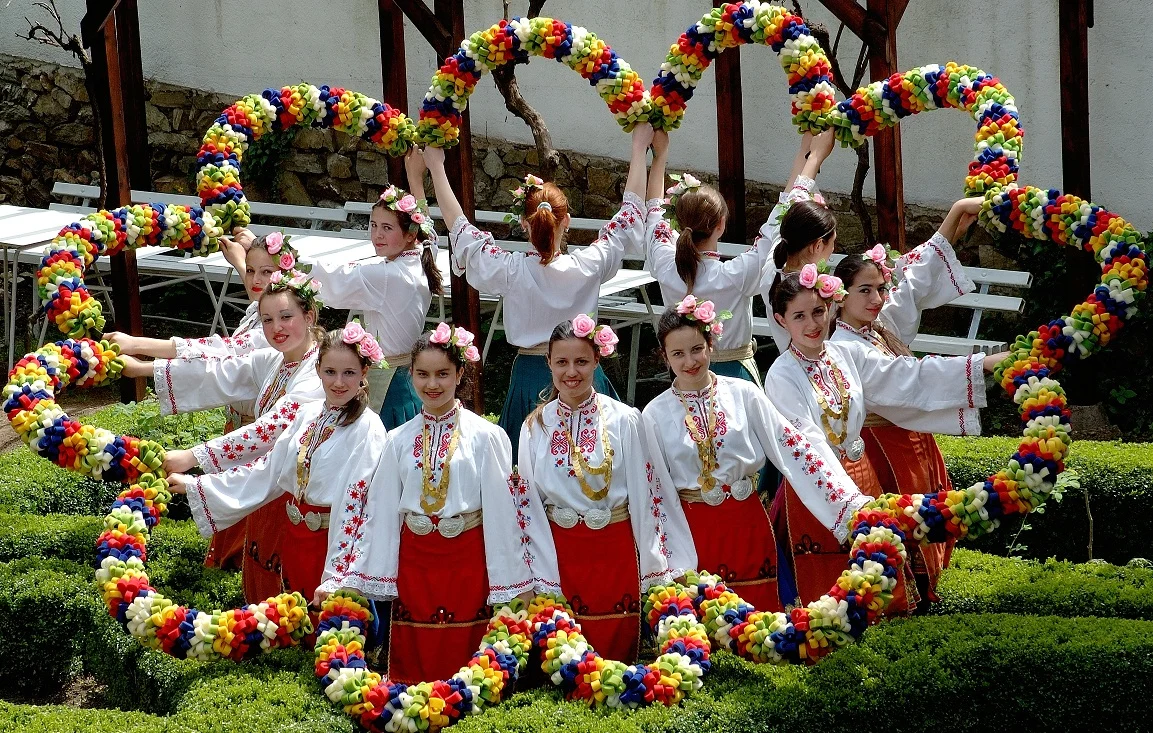
Folk dances are suitable for all ages. All you need is the desire to dance and a love for it. They’re effective for both women and men. They’re called “fitness for the soul” and “an antidepressant” because of their positive effect on emotional well-being.
As well as lifting our spirits, traditional dances are an enjoyable and engaging way to stay in shape, combining movements of the legs, body, arms and head. They’re great for losing weight, burning calories and building stamina. They strengthen the back, abdominal, arm and leg muscles, help maintain joint mobility, and make the body look slimmer and more graceful.
Read more: Spinning in Focus: Indoor Cycling for Everyone
The main muscle group worked is the legs, especially the thighs, lower legs and calves. Arm and shoulder muscles are engaged by arm movements, while jumps work the glutes. Some traditional dances include movements in a crouched position, which also work the lower back, back and abdominal muscles.
It’s no coincidence that Bulgaria has six ethnographic regions, each with its own characteristic movements—from very fast and dynamic to slow, or movements that gradually pick up the pace. Some of the most distinctive steps include stomping, kicking, crouching, bouncing, shaking and lifting the legs high—elements also found in many fitness exercises.
How can folk dancing replace another type of cardio workout?
Folk dancing can easily replace a cardio workout. The movements burn calories quickly and efficiently. Studies show that a one-hour rehearsal burns between 250 and 400 calories—the same as an aerobic cardio workout.
Read more: HIIT or interval cardio: what is it, how do you do it, and what are the benefits?
Studies show that folk dancing also has health benefits:
- improves blood pressure and cholesterol levels
- keeps the cardiovascular system in good shape and reduces the risk of related diseases
- strengthens bones
- tones muscles
In addition to all this, folk dancing acts like a natural antidepressant, helping people feel more cheerful, calm, and happy. It also exercises the mind. The different combinations of steps and sequences keep the brain active, which can help improve memory, concentration, and coordination.
Read more: Circuit training – what is it and what are its benefits?
Other key benefits of dancing include:
- building self-confidence
- maintaining good fitness
- improving overall well-being
- meeting new people
- boosting energy
And all this happens while you’re having fun.
What happens during a folk dance rehearsal?
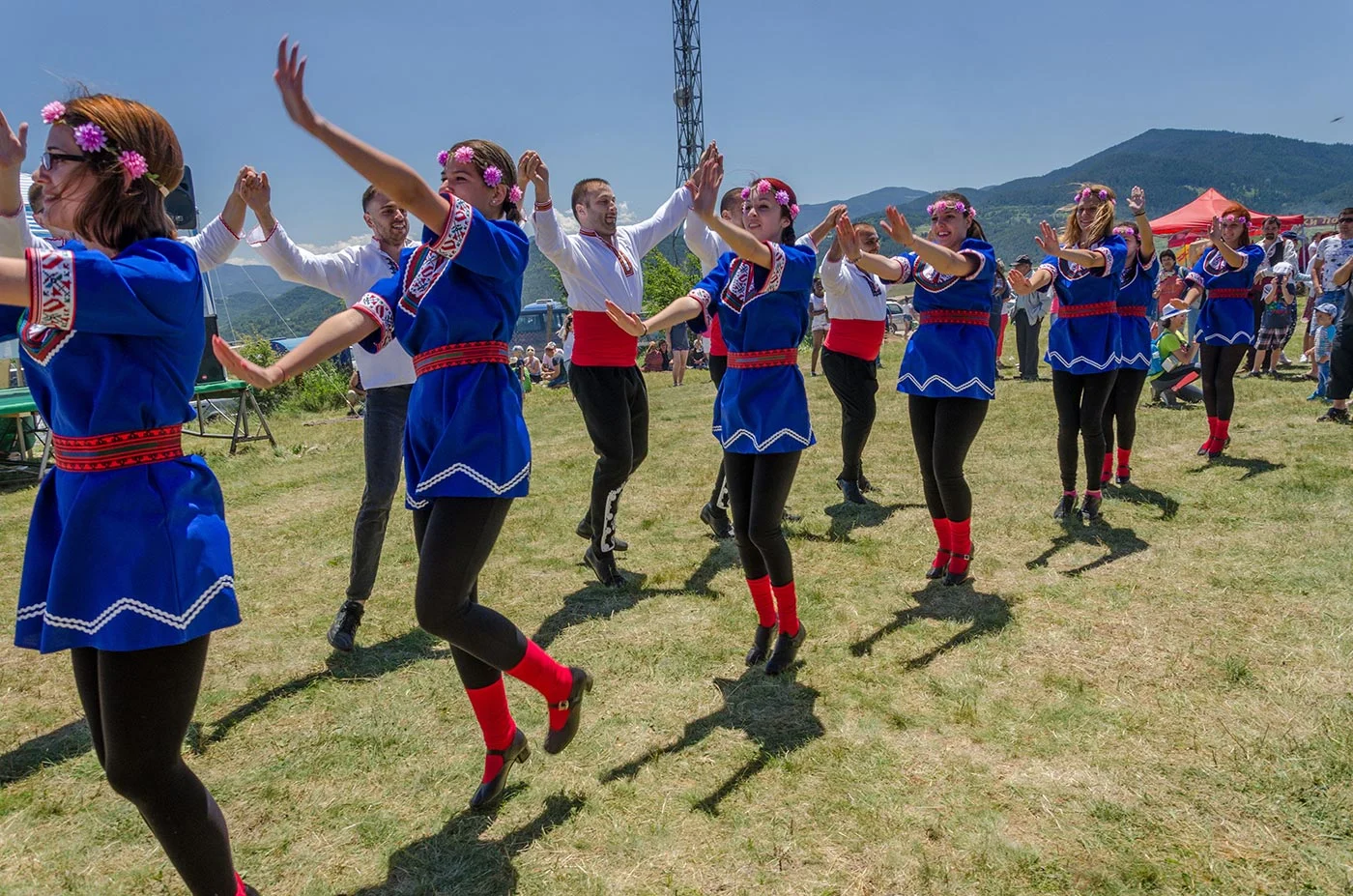
A folk dance rehearsal always begins with a mandatory warm-up called “exercises.” It includes movements to loosen up the neck, shoulders, lower back, knees, and ankles, and is somewhat similar to ballet barre exercises and stretching.
The basic movements include squats in different positions, arm and head exercises, jumps, leaps, bends, and more. It’s important to warm up the joints thoroughly, as the jumping that follows is intense and puts much of the strain on them. Warming up all the muscle groups reduces the risk of injury and muscle soreness.
Read more: What should we know about muscle cramps?
Then all the dancers join hands and form a horo. They usually start with a slower, easier dance, with the rhythm and complexity increasing with each one. The instructor demonstrates new dances slowly and step by step, giving everyone a chance to learn the movements.
Along with learning the steps, folk dancing involves almost constant arm movements, accompanied by singing and characteristic shouts. This creates an extra sense of atmosphere and excitement. One of the biggest challenges in folk dancing, especially for beginners, is the use of uneven meters, but with patience and practice, they can be mastered. Rehearsals usually last one full hour, which is more than enough to maintain good physical and mental health.
What kind of diet can you combine it with?
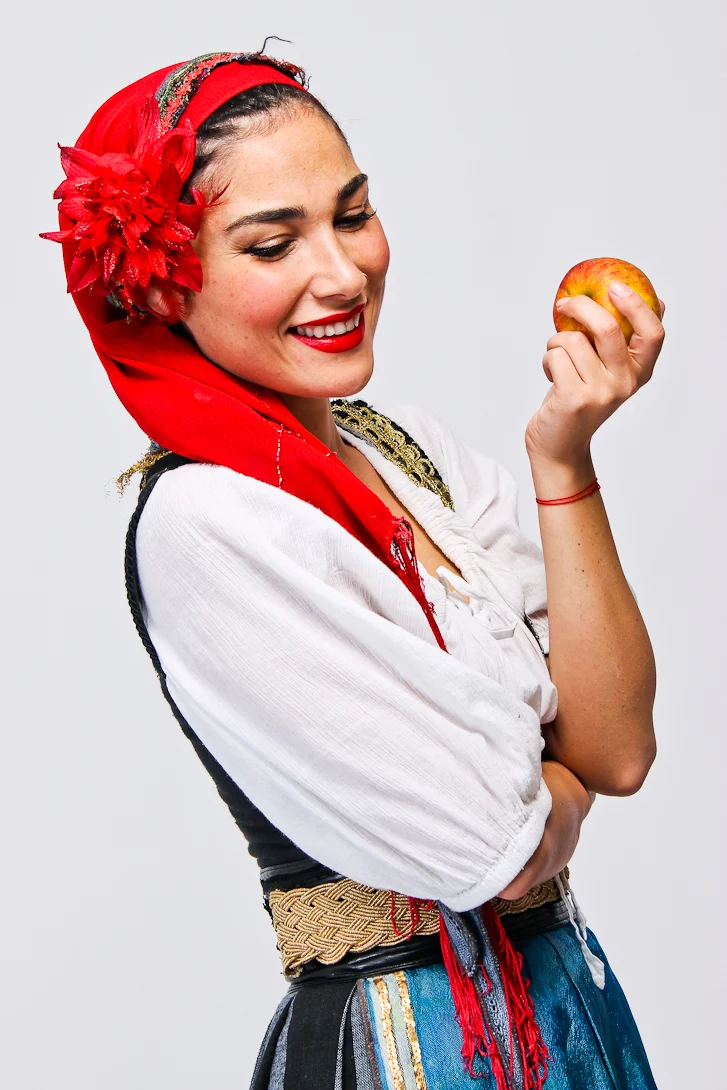
As mentioned, folk dancing has many benefits. If you attend rehearsals regularly, there’s no need to follow extreme diets. Instead, maintain a well-balanced diet, as your body needs energy.
Read more: A diet with autumn fruits and vegetables
Extreme diets with very low food intake can only slow your metabolism further. For more effective results, eat complex carbohydrates (all whole-grain products, brown rice, oats, vegetables, and legumes), healthy unsaturated fats (fish, oil, nuts), quality protein (poultry, fish, low-fat dairy products, egg whites, and plant-based foods such as beans, nuts, and even bread and rice), as well as plenty of fruit and vegetables.
An equally important part of the process is drinking at least 2 liters of water a day, getting a healthy 8 hours of sleep, and attending rehearsals regularly.