

How do you measure your success in the gym? Do you define it by how much you weigh on the scales? How much weight you can lift? Or by how your clothes fit? The purpose of all these measurements is to provide meaningful information that shows whether we have taken the right steps toward achieving our goals.
Methods for measuring progress should always be aligned with the goals set by the person training. This is because one method may provide accurate results for one goal (such as weight loss), but may not be suitable for another (such as building muscle mass). To make sure we get accurate feedback on the effort we put in at the gym, the best approach is to use and combine several different methods for measuring progress.
What are the main methods for measuring weight-loss progress in the gym?
Weight (scales)
This is the easiest and first measurement method that comes to mind. It is very accurate and informative, but only if your goal is to lose a certain number of kilos. For example, if you want to lose 50 kg of body fat, the scales will certainly show whether you are on the right track.
However, it does not give you a complete picture of your progress, and if your goal is to build muscle, you cannot track that with the scales. For this reason, it is recommended that you combine this method with other measurement methods.
Body Mass Index (BMI)
Body mass index is used to estimate body fat based on the ratio of height to weight. Many online calculators can determine your individual BMI, and the results fall into the following categories:
- underweight (below 18.5)
- normal weight (18.5 to 24.9)
- Overweight (25 to 29.9)
- Obesity (over 30)
But using this method has one drawback. The body mass index does not take into account the amount of muscle mass in the body. This means that athletes with more muscle often fall into the “obese” category. For this reason, it’s best to use the BMI method only during the first few weeks of a fitness program to determine whether you’re making progress.
Body measurements
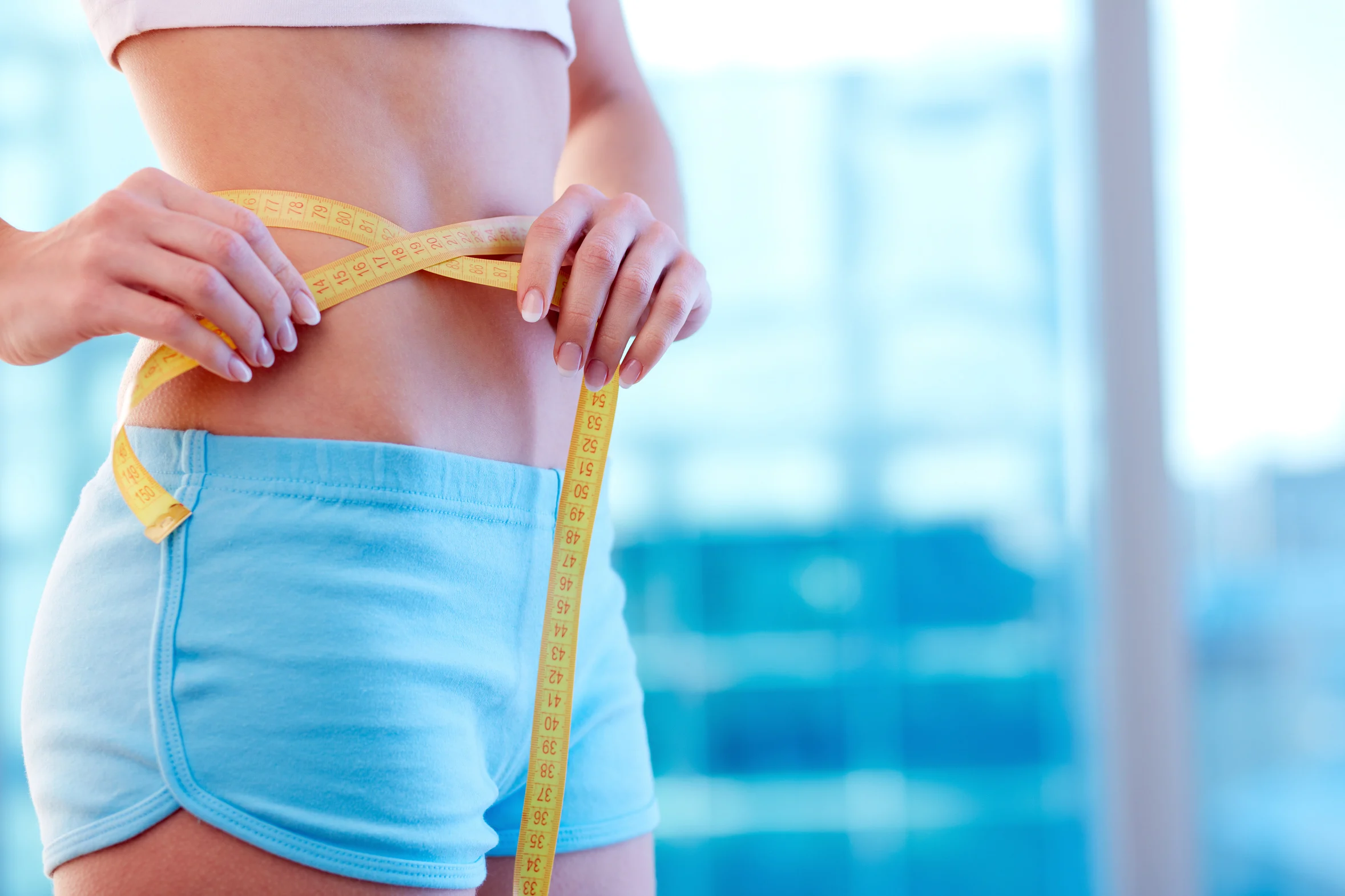
Taking measurements with a tape measure is another great way to determine whether you’re making progress toward your goal, whether it’s weight loss or muscle gain. This involves measuring the circumference of different areas of the body—biceps, chest, waist, hips, thighs, and calves. According to many fitness experts, tracking changes in your body with a tape measure is a much more accurate and effective method than using the scales.
There are two main reasons for this:
- when your main goal is to change your body shape, you should aim to gain muscle mass rather than lose weight;
- many external factors can affect your weight at a given time—for example, water retention, fatigue, constipation, etc.
How to correctly measure your waist, hips, chest, thighs, calves, and biceps
- Waist: Place the tape measure about 13 mm above your navel. It’s best to exhale first and measure your waist before inhaling.
- Hips: Measure around the widest part of your hips
- Chest: Place the tape measure just below your chest and wrap it all the way around your torso
- Thigh: Again, measure around the widest part of your thigh
- Calf: Measure around its fullest part
- Biceps: Place the tape measure above your elbow and wrap it around the fullest part of your biceps
Body Mass Index (BMI)
Body mass index is used to estimate body fat based on the ratio of height to weight. Many online calculators can determine your individual BMI, and the results fall into the following categories:
- underweight (below 18.5)
- normal weight (18.5 to 24.9)
- Overweight (25 to 29.9)
- Obesity (over 30)
But using this method has one drawback. The body mass index does not take into account the amount of muscle mass in the body. This means that athletes with more muscle often fall into the “obese” category. For this reason, it’s best to use the BMI method only during the first few weeks of a fitness program to determine whether you’re making progress.
What are the main ways to measure progress in strength training for muscle gain?
Before-and-after photos
Photos are another very easy and accurate way to objectively see your progress. They show changes in your body shape, muscle size, definition, and even a reduction in cellulite. For this to be an objective method, however, it’s best to follow a few basic rules when taking photos:
- Take your first photos at the start (or during the first week) of your new fitness challenge
- Men should wear shorts or swim trunks without a top, and women should wear a bikini or shorts and a bra or swimsuit;
- Keep your stomach visible—don’t suck it in. You’ll probably see the most noticeable changes there;
- Take one front-facing photo and one side-facing photo
- Take your next photos 30 days later—in the same clothes, in the same place, and in the same poses.
Increase the number of exercises / reps / sets
Improvements in strength and endurance are some of the most positive changes on the way to achieving your goals. They’re also one way to measure success. In other words, if you’re making progress in the number of exercises, reps, and sets you can do in a workout, you’re definitely getting closer to your goal.
When you try to improve every workout by adding at least one more rep, you can be sure the results will follow.
Fitness trackers / fitness apps
Electronic bracelets and fitness apps that track eating and exercise routines are essentially journals. You can choose exactly what to track with them and change that information over time. These apps are especially suitable for beginner fitness enthusiasts. They can track calories consumed during the day, exercises completed and calories burned, the amount of water consumed, steps taken throughout the day, and record data related to changes in weight or measurements.
Keeping a Workout Journal
A common fitness mistake is doing the same workouts without changing them, as well as lifting the same weights when it comes to strength training.
Keeping a workout journal is certainly one of the easiest and most effective ways to track how many kilos you manage to lift after each workout. This way, you’ll know whether you’ve become stronger, and it will help you adjust your program if needed. As we’ve already established, the heavier the weights needed for an effective workout, the closer you are to your goal—which in this case is building muscle mass.
How Do You Track Psychological Changes in Fitness?
In addition to the physical changes that take place in the body, exercise also has a positive effect on the mind.
During exercise, the body releases endorphins, which improve your mood. It’s no coincidence that after a workout we feel happier, more motivated, and more energetic.
Physical activity also increases the production of adenosine in the brain, a substance that makes us sleepy. And the harder we train, the more deeply we can sleep at night.
It’s a good idea to keep a journal so you can track these changes and use them as extra motivation.
The Principle of Individuality
The principle of individuality states that no two people will achieve exactly the same physical or psychological results from exercise. Everyone is born with a different mindset, body shape, predominant type of muscle fibers, and other genetic predispositions. These factors make us all unique, which is why people need different types of exercise and diets to achieve their goals.
People who work out at the gym differ in age, gender, occupation, type of work, and so on. A particular training and nutrition plan may work for some, but be completely unsuitable for others. Tracking your progress using the methods mentioned above can show you whether you’re on the right track.