

Has yet another diet failed to help you achieve your goal of a toned, sculpted body, because it hasn’t delivered the change you’re looking for? Have you lost the drive and motivation to keep training after spending dozens of hours at the gym, only to see minimal results that don’t satisfy you? These are problems faced by many people who train without working with a fitness instructor. If this sounds like you, don’t give up. Get back to training as soon as possible—but this time, with a trainer. To make sure you choose the right fitness instructor for you, read this article to the end.
Do I need a personal trainer?

There are many reasons why people choose to have a personal trainer—some want a personalized fitness programto make sure they lose weight or achieve their desired look, while others are looking for someone to guide them and help them be more disciplined and accountable with their workouts.
The truth, though, is that a personal trainer can offer much more than that—they motivate and challenge you, know how to vary your workouts so you don’t get bored, help you build consistency, protect you from injury and overexertion, and teach you how to perform different types of exercises correctly, so they deliver real results. A personal fitness instructor is also essential when you need more specialized attention for health reasons.
But a personal trainer’s greatest contribution is changing attitudes toward physical activity. A study of 129 volunteers aged 20 to 65 who took part in a 10-week training program with a personal fitness instructor, shows that 73% of them completely changed their attitude toward fitness training. It was no longer just an obligation, but part of their daily routine. The results they achieved were also significant.
In addition, with a trainer, people feel more accountable, rarely miss a workout, and perform the exercises to the best of their ability without skipping reps, because they know someone is keeping an eye on them.
What should the instructor do at the very beginning?
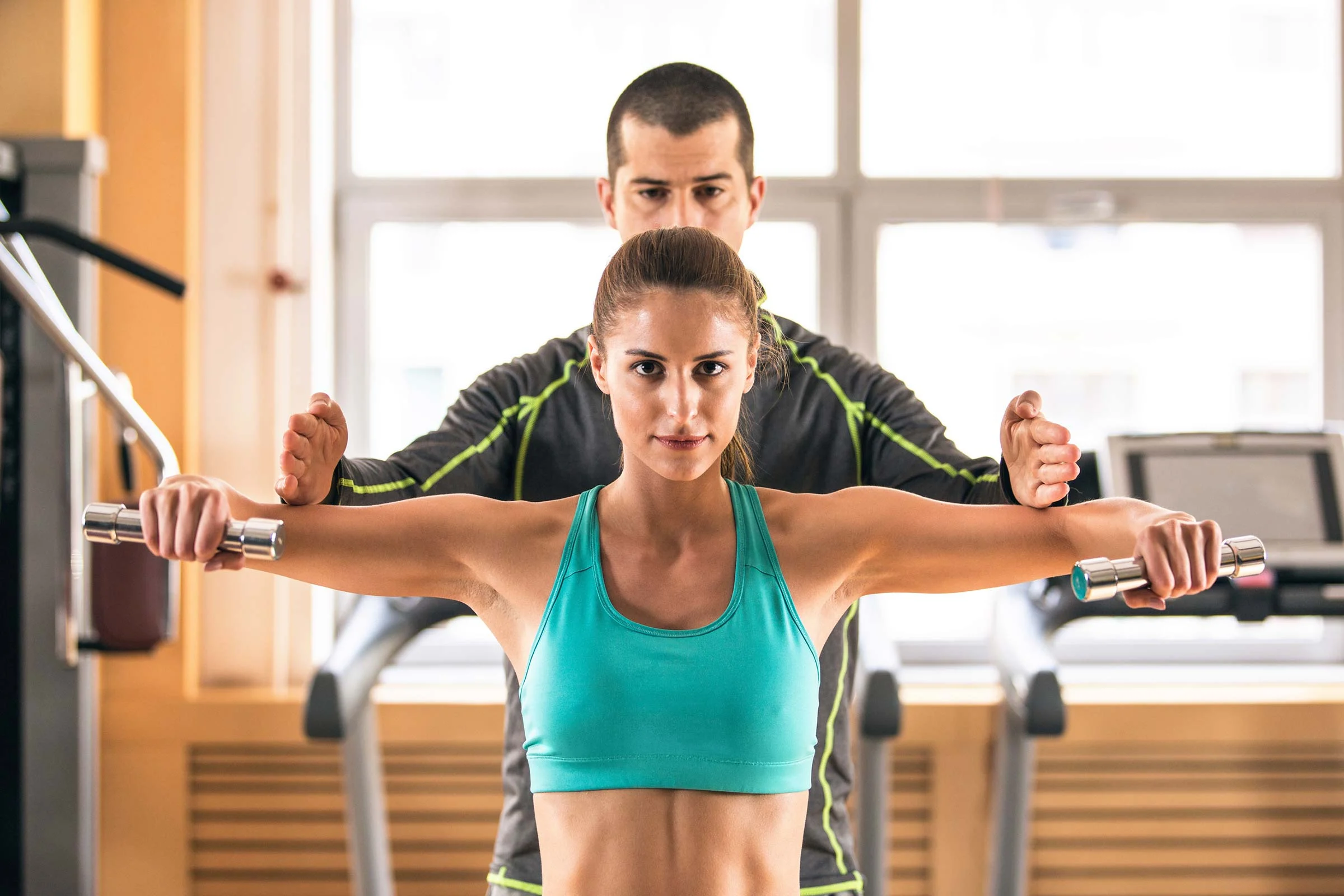
Before you start working together, your chosen instructor will ask for some background information. Based on it, they’ll create an individual fitness program tailored specifically to you and your goals.
One of the first questions you’ll hear will be about your eating habits—it’s well known that a toned body is 80% nutrition and 20% training. Other important questions include what goals you’re pursuing, including whether you want to achieve a specific look for an upcoming important event, such as a graduation or wedding; what your previous workout experience is; whether you’ve had any past injuries; and whether you’ve been through a recent birth or significant weight gain, caused by health problems.
Your answers matter because the exercises you do will be tailored to them. Your trainer will often tell you about their experience with similar clients and the results they’ve achieved.
Usually, right from the start, you’ll also hear what realistic expectations are for visible change. This is one of the biggest misconceptions in the world of fitness, and the instructor you work with will do their best to dispel it. A perfect-looking body is the result of considerable effort and is also influenced by many factors, such as nutrition, genetics, lifestyle, how much time you have, how you rest, how intensely you train, and much more.
Your trainer will explain this, and when you start working together in the gym, you’ll see that the harder you try to follow their guidance, the happier you’ll be with the results. You’ll also come to understand what you can expect from your own body. It’s important to note that every body can be transformed. What can hold you back is your refusal to work out.
What is a personal training session like?
Sessions with a personal trainer usually last about an hour. The first meeting is always for assessing your fitness level, reviewing your health history, and discussing your goals. It’s also time to take measurements— height, weight, body mass index (BMI), bone density, hydration level, and body fat percentage.
After that, each workout includes three main parts: cardio, functional training, and strength training. The balance of these three elements depends on the instructor. You may have a longer cardio session and a shorter strength session. It’s also possible for the functional training section to take up almost 50% of the entire session, and at the beginning, it usually fills the whole workout.
Trust is of the utmost importance here. Your instructor is an expert in their field, and you’ll benefit greatly from trusting them. Every exercise your fitness instructor asks you to do will be tailored to your personal goals and your body’s current capabilities.
Fitness trainer understands exactly what your capacity is every time you visit the gym, and can adjust your workout plan accordingly. They know when and how much rest you need, as well as how to alternate workouts and how much time to spend in each zone, working on each specific exercise.
Does the instructor provide a detailed explanation of the exercises and their goals?
The short answer is “yes, absolutely.” This is one of their main duties as a personal trainer—to teach and educate you. Your instructor will tell you more about the different muscles in your body and which equipment works different muscle groups. They will also explain how to perform the exercises as accurately as possible, because proper exercise technique is one of the main requirements for achieving your desired results.
Even if you prefer to work out on your own, this information is extremely important, and it’s best to start with an instructor if you’ve never set foot in a gym before.
Should an instructor have certificates, awards, and diplomas?
As with any other profession, being a personal trainer requires practitioners to complete specialized trainingin advance. Awards and diplomas are an additional indication of a trainer’s credentials, but their certifications are essential.
There are many different types, and they prove that the trainer has completed training. They also show what the instructor specializes in. However, it’s important for clients to be sure that the person training them is accredited. These types of accredited certifications carry the most weight.
In Bulgaria, specialized training is available at the National Sports Academy and Fitness Academy Bulgaria, where those who successfully complete the course are registered in the European Register of Exercise Professionals. Pulse Fitness & SPA has its own fitness academy, which also awards certificates to trainers who complete the course.
A personal trainer’s specialization is an important factor when choosing one. We recommend choosing a trainer whose specialization matches your specific needs. This means that if your goals are, for example, gaining weight and muscle mass, your instructor should be a bodybuilding or strength training specialist.
For weight loss, the best specialists focus on weight reduction; for toning and shaping, specialists in programs such as B-Pump, TapOut and Spinningare also suitable. If you have injuries, mobility issues, or other health problems, your personal trainer should have completed similar training or training in sports rehabilitation and injury prevention.
The advantage of Pulse Fitness & Spa is that our staff can direct you to the right instructor for you, if you’re clear about your personal goals. Even if they change over time, you can always count on having the specialist best suited to you by your side.
How does an instructor build trust and motivation?
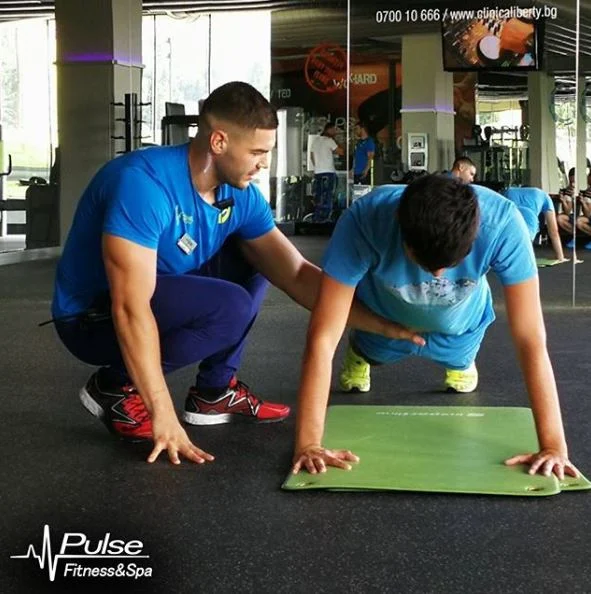
Trust is the first and most important step for a trainer and trainee to work effectively together. It’s the key to success, and the fitness instructor plays a central role in building it.
The process starts right at the beginning. As well as asking questions, a personal trainer is a good listener. Share your concerns and questions, and you’ll get the answers you need to move forward.
Trainers use a range of motivational tools, including charts, personal trainee profiles and mobile apps. These help record short- and long-term goals, plans for achieving them and members’ progress.
Motivation techniques also include varying workout days by introducing new equipment or exercises, as well as creating fitness challenges, which bring out trainees’ competitive spirit and make every workout more engaging and fun. Breaking bigger goals down into smaller, individual challenges is highly motivating, because completing each one boosts trainees’ satisfaction and confidence that they’re on the right track.
Should your fitness instructor or a dietitian create your meal plan?

If your fitness instructor is both a trainer and a nutrition expert, they can create both a workout plan and a meal plan. Of course, working with both a personal trainer and a dietitian can deliver equally great results, or perhaps even better ones. However, it can be harder for a dietitian to do this without the instructor’s input, so they need to work as a team.
First and foremost, a personalized meal plan is particularly important for choosing the right foods to eat before and after a workout. These are two of the most important meals for anyone who trains, helping ensure you have enough energy before your workout and replenish the nutrients your body needs afterward.
A good meal plan should also be tailored to your goals—whether that means losing weight, building muscle or maintaining a toned physique. Your instructor knows what you’re working toward.
For weight loss, for example, a suitable meal plan includes a limited intake of fats, and simple carbohydrates, and more lean protein and complex carbohydrates from whole grains. Building muscle requires more calories, with an emphasis on protein, while healthy fats and carbohydrates should be consumed in moderate amounts. These three macronutrients also have a place in specific amounts when the goal is to maintain your current physique.
It’s important to remember that not every personal trainer can create a meal plan. Personal trainers usually choose to develop this skill themselves, which, like fitness certifications, requires completing a course and passing exams.
In these cases, you can turn to Pulse’s specialist dietitians and nutritionists, who are available upon request. Ask your personal trainer about this option, and they’ll point you in the right direction.