

If you want to add extra intensity to your workouts or are planning a holiday, or a business trip but want to stay in shape, you can do so with resistance bands. They offer plenty of ways to work your entire body and are also incredibly lightweight and easy to carry.
Resistance bands are an accessory suitable for beginner and advanced fitness enthusiasts alike. They’re often used even by professional athletes looking to focus on functional and conditioning exercises. Exercises with resistance bands are less likely to cause injuries. The variety of movements they enable makes for a comprehensive workout.
Resistance bands keep your muscles under constant tension during exercise. While free weights create resistance opposite to gravity, bands can be stretched in any direction and from any position. Resistance is greatest at the peak of the movement, unlike when using dumbbells or a barbell.
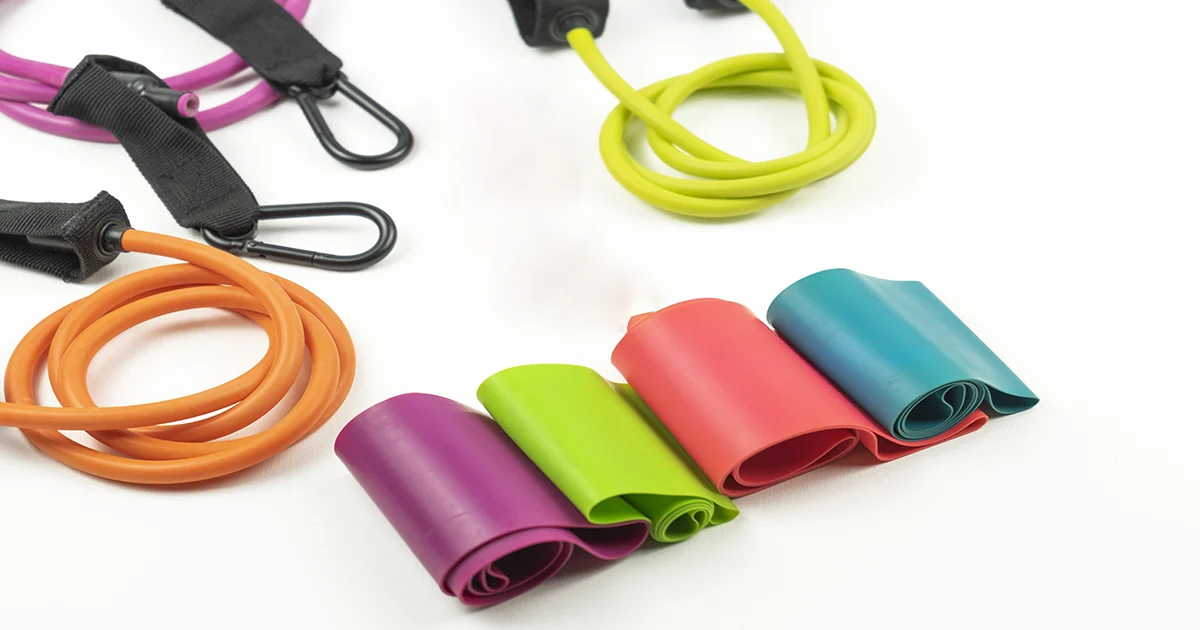
Resistance Bands for Workouts – Types
There are far more types of resistance bands than most people realize. They’re designed to help achieve different fitness goals. The main types are:
Compact Resistance Bands
These are the most commonly found bands in gyms. They have fixed handles and are ideal for exercises targeting the upper body, arms and legs. They come in different resistance levels and are usually made of latex.
Flat Resistance Bands
Flat fitness bands come in two main types: workout strips and loop bands. They’re named for their flat shape and are often used in rehabilitation and Pilates.
Leg Resistance Bands
As the name suggests, these bands have ankle straps and are primarily used to train the lower body.
Resistance Bands with Carabiners
These latex bands have carabiners at the ends, allowing you to attach all kinds of handles. They come in different lengths and thicknesses. They’re extremely portable and can be used anywhere.
Figure-Eight Bands
These resistance bands are called figure-eight bands (sometimes bow-tie bands) because their shape resembles the number eight. They’re ideal for upper-body and arm workouts. They usually come in a standard length of 50 cm.
Pull-Up Resistance Bands
These bands are long and sturdy, as you’d expect since they’re used for pull-ups. They come in different resistance levels, depending on how much assistance or challenge you want during your pull-ups. They’re usually used with a pull-up bar at home or at the gym.
Rings
These workout bands are circular and resemble an expandable hoop. They may have two handles on the sides that are less flexible. They’re an excellent choice for training the lower body.
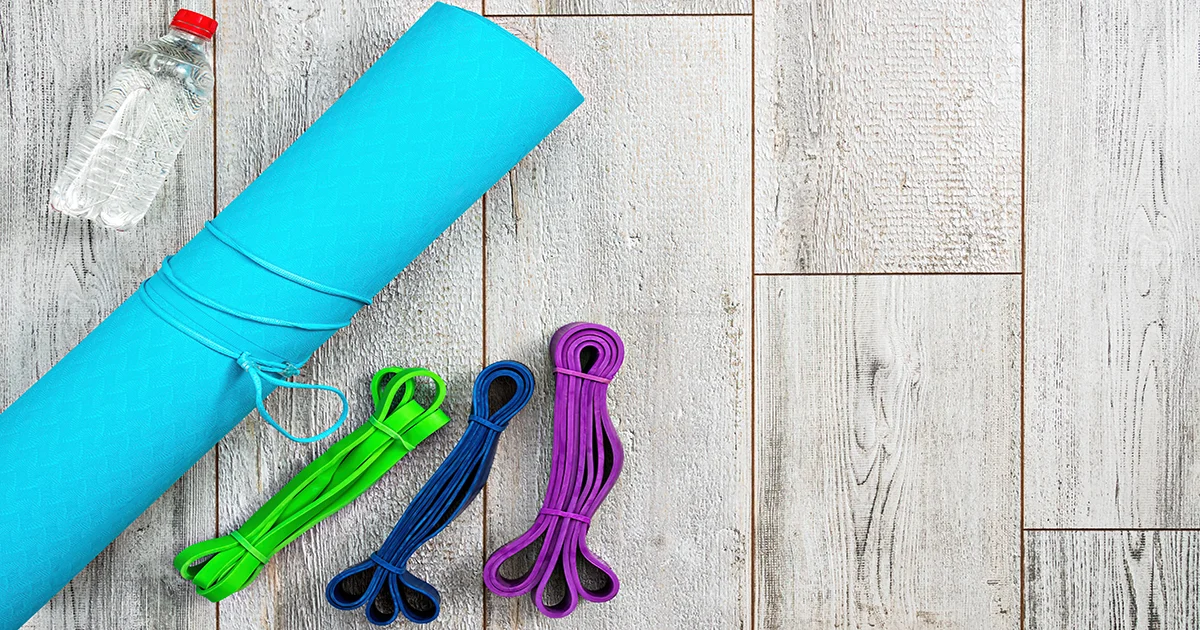
Main resistance levels of fitness bands
Light resistance
These bands are thinner and provide around 1.5 kilograms of resistance, which is relatively light. This makes them ideal for beginners and people undergoing rehabilitation.
Medium resistance
These bands are ideal for physically active people who want to progress in their workouts. They provide 3 to 6 kilograms of resistance.
Heavy resistance
These are considerably thicker bands, with resistance of up to 9 kilograms. They’re used by people who are strong and train regularly.
Extra-heavy resistance
These workout bands provide the greatest possible resistance, which can exceed 10 kilograms. They’re recommended for strong, physically fit people looking for a more intense and challenging workout.
The length, shape, and type of band you choose depend entirely on the exercises you’ll be doing and the muscle groups you want to target.
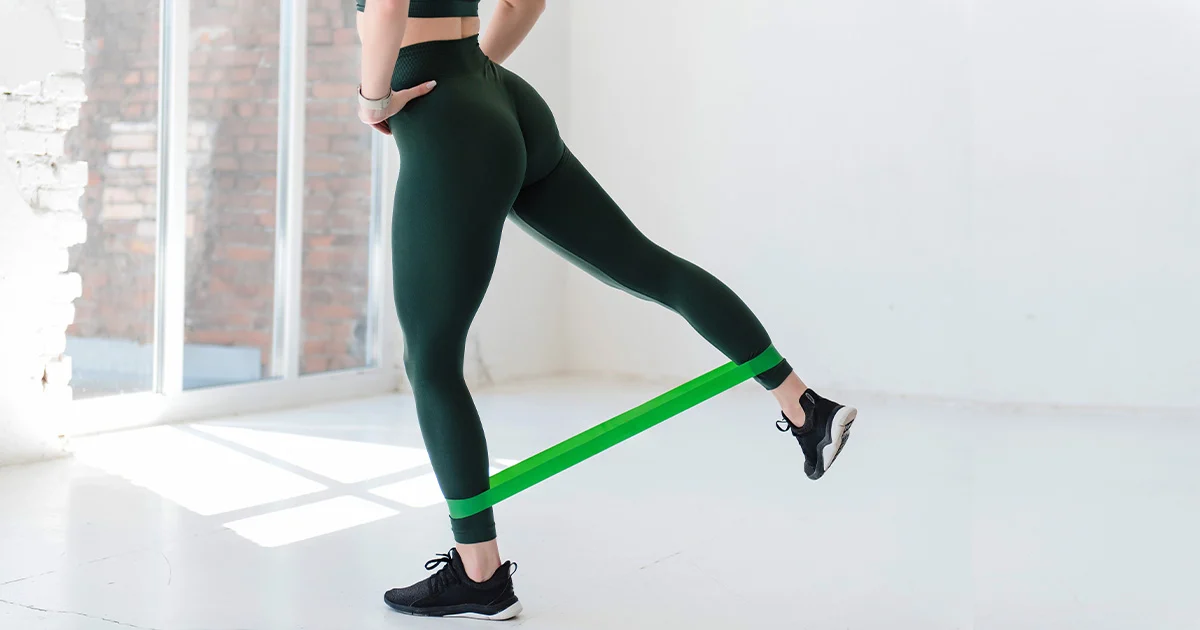
Exercises with workout bands
To be as helpful as possible, we’ll share some of the most effective workout band exercises for the lower body.
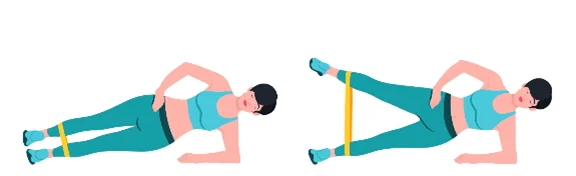
Lateral Leg Lift – Side Leg Raise
Lie on your side with your legs straight, and use your arms for support. Place the band around your ankles or calves. Raise your top leg while keeping your lower leg firmly on the floor. Do 10–15 reps per set. This exercise works all the muscles along your leg, the inner thighs, and the glutes. It also strengthens the hip muscles.
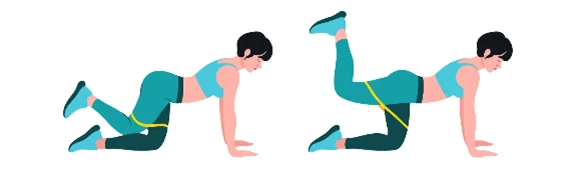
Donkey Kicks
Get on all fours, making sure your knees are under your hips and your hands are under your shoulders. Place the band around your thighs and push one leg upward, keeping your knee bent. Hold for two to three seconds, then return to the starting position and repeat. Donkey kicks help sculpt your glutes and thighs while strengthening the muscles of your lower back.
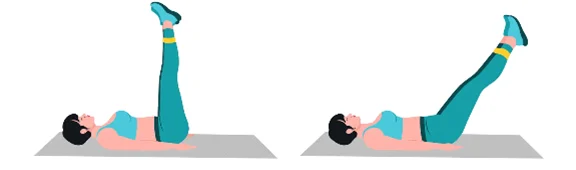
Double Leg Lower
This exercise is highly effective for the abdominal muscles. They work hard to control the weight of your entire lower body. It also helps strengthen your lower back and back muscles. It’s very easy to do: lie on the floor with your arms and legs extended, and place the workout band around your legs to keep them together. Start with your legs raised about 30 degrees. Lift them until they’re perpendicular to the floor, then lower them back to the starting position. The more reps you do, the more challenging the exercise becomes.
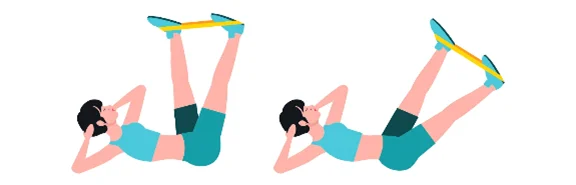
Corkscrew
This exercise is a little more challenging, but it’s also more comprehensive, working almost the entire lower body. Lie on the floor with your arms and legs extended. Keep your arms close to your body, perpendicular to the floor, for support. Place the fitness band around your legs to keep them together. Begin lifting your legs off the floor, moving them in a semicircle until they’re vertical. Repeat in the opposite direction. The corkscrew-like spiral movements work your legs and abs while strengthening your lower back.
If you need additional advice, help correcting your technique, or recommendations on which type of workout bands are best for you, you can contact the professional team of instructors at Pulsе.