

Building strong leg muscles is not just about looking good—it also helps you achieve your overall fitness goals. When you do leg exercises , you engage some of the largest muscles in your body. This helps create a metabolic statethat supports the development and growth of many other muscles, not just those in your legs.
Lower-body workouts actually stimulate muscle growth in your upper body. They also strengthen the bones in your legs and reduce the risk of injuries.
That’s why it’s important to set aside enough time in your workout routine for leg exercises. But when choosing which fitness machines to use, you need to know which ones are most effective for isolating and developing specific muscles.
Why Is It Important to Train Your Legs?
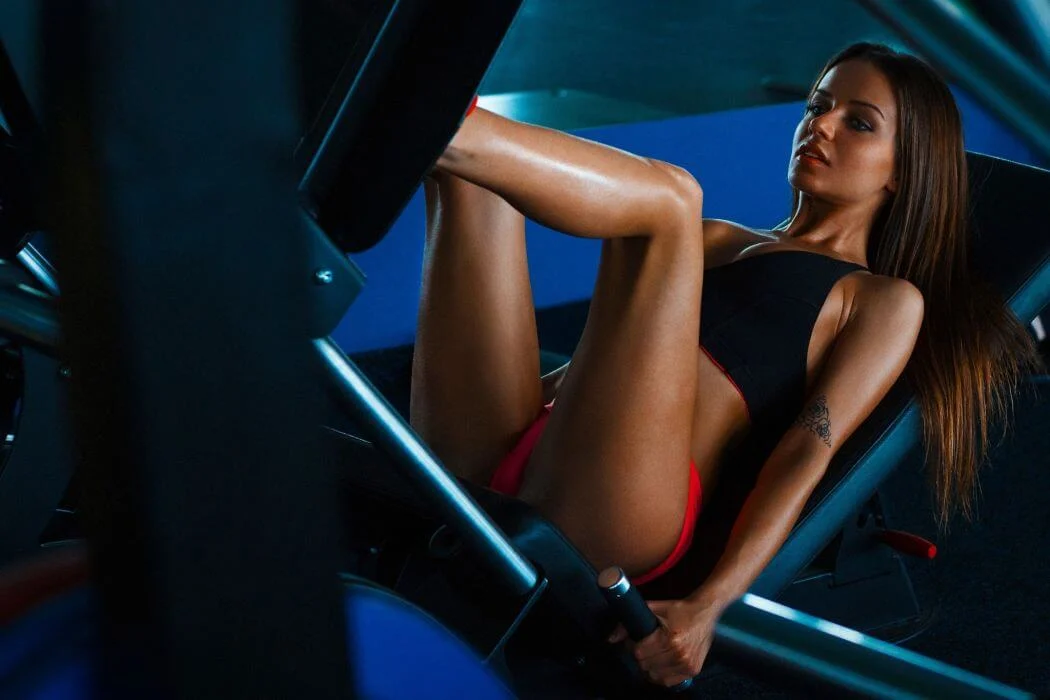
For many people, leg workouts are among the hardest—and, unfortunately, least popular. But that’s exactly what makes them so effective. Because these exercises require a lot of effort, your body burns a large amount of energy. Replenishing it involves processes that lead to increased muscle mass.
For the same reason, your metabolism speeds up, and you continue to burn calories—even at rest—for a day or two after your leg workout.
Last, at least in terms of health, we place the aesthetic factor. Unlike women, who choose to train their legs to look attractive, many men skip these muscle groups in favor of more prominent arms, back and chest. In the long run, this can lead to unattractive imbalances in overall muscle development and largely undermine months or even years of hard work on the upper body.
What are the most effective leg machines?
Leg press
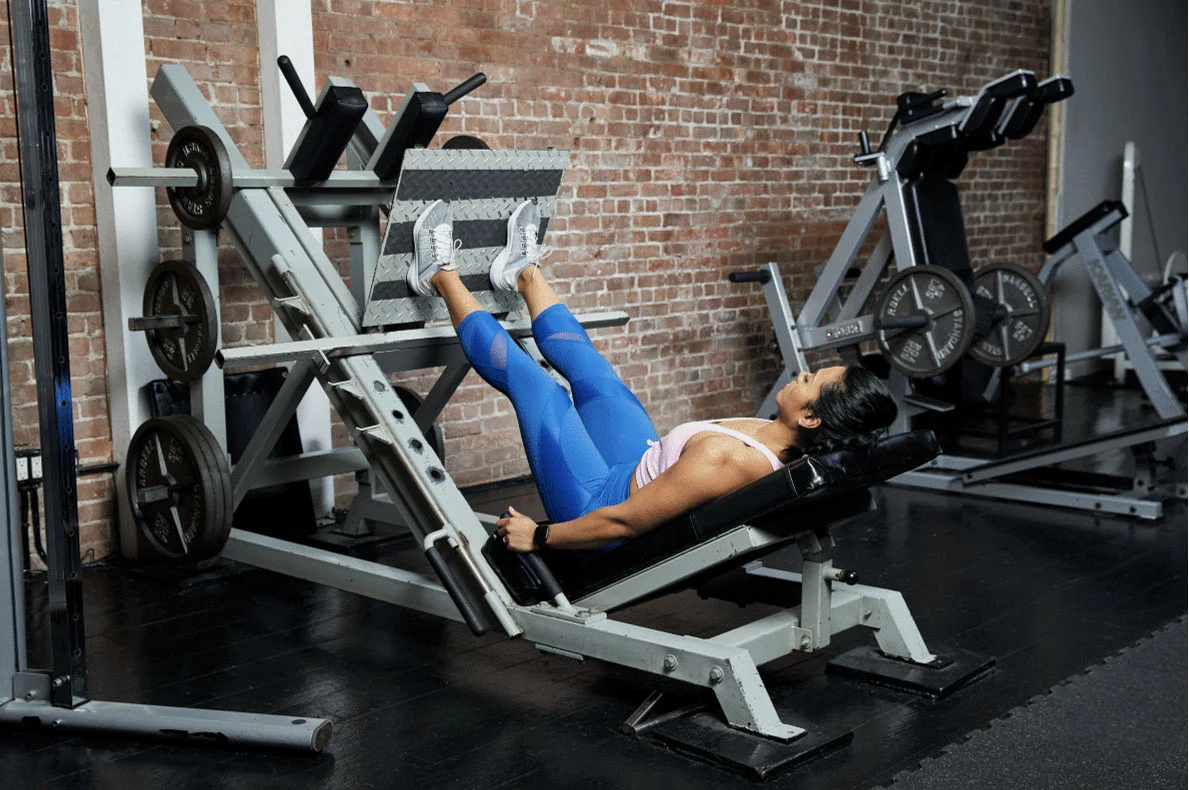
The leg press is one of the essential and most popular fitness machines for building strong leg muscles, especially the thighs. It targets the back of the thighs and the quadriceps, as well as the gluteus maximus.
The leg press exercise involves pushing a selected weight, depending on your fitness level. It is important to use the correct technique: push with your entire foot, focusing on your heels. A stable base helps prevent strain on the knee joints.
The leg press is suitable for beginners and advanced users alike. For beginners, horizontal models are generally recommended, where you push the weights forward. Vertical models are more familiar, however, and provide a more intense workout because you push the weights upward, usually at a 45-degree angle, or 90 degrees for more advanced users.
When using the leg press, warm up your legs thoroughly before moving on to more intense reps. Around 20 lighter presses are enough to assess your body's capacity for the workout. Don't load more weight than that.
This helps you decide how much weight to use. Then, for a good workout, you can do 2-3 sets of 10 reps, then reduce the weight by half to cool down and do 1 set of 20 reps.
Leg curl
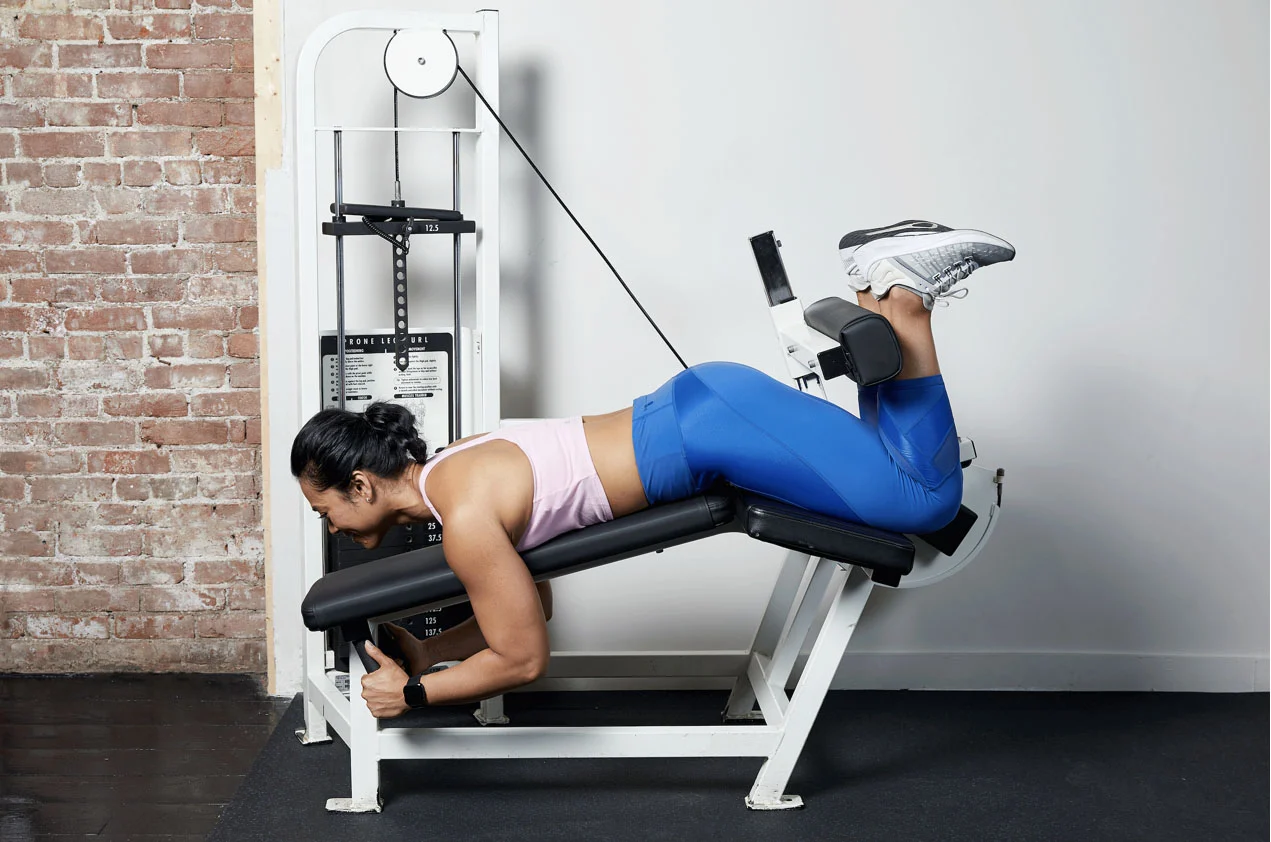
Leg curl machines are among the essentials for toning and strengthening the hamstrings, one of the hardest areas to shape. They also work the quadriceps, glutes and knees. They're a great addition to your workout routinebecause they protect your joints and knees from additional strain and injury.
To do the exercise lying down, lie face down and place your lower calves under the bar, which is connected to a weight stack. First, choose a suitable weight. Start lifting the bar back toward your glutes, trying to bring your heels as close as possible to your glutes. With good form and a suitable weight, you should be able to do 12 to 15 reps. To improve strength in this part of your legs, aim to include at least 4 sets of 15 reps of the leg curl exercise in your routine twice a week.
This is a highly effective exercise that thoroughly works the hamstrings, especially the semitendinosus—the middle of the three muscles that make up the so-called hamstrings.
Leg extension
The leg extension is another isolated strength exercise performed on a specially designed machine. It mainly targets the quadriceps, the muscles at the front of the thighs. The exercise is similar to the leg curl, but the lever and weights are lifted with the lower front part of the leg, moving forward rather than backward. When performed correctly, you should not feel strain or stress on your knees. Also, when sitting on the seat, it’s important to leave a little space between the shin pad and your knees.
Inner and outer thigh machine
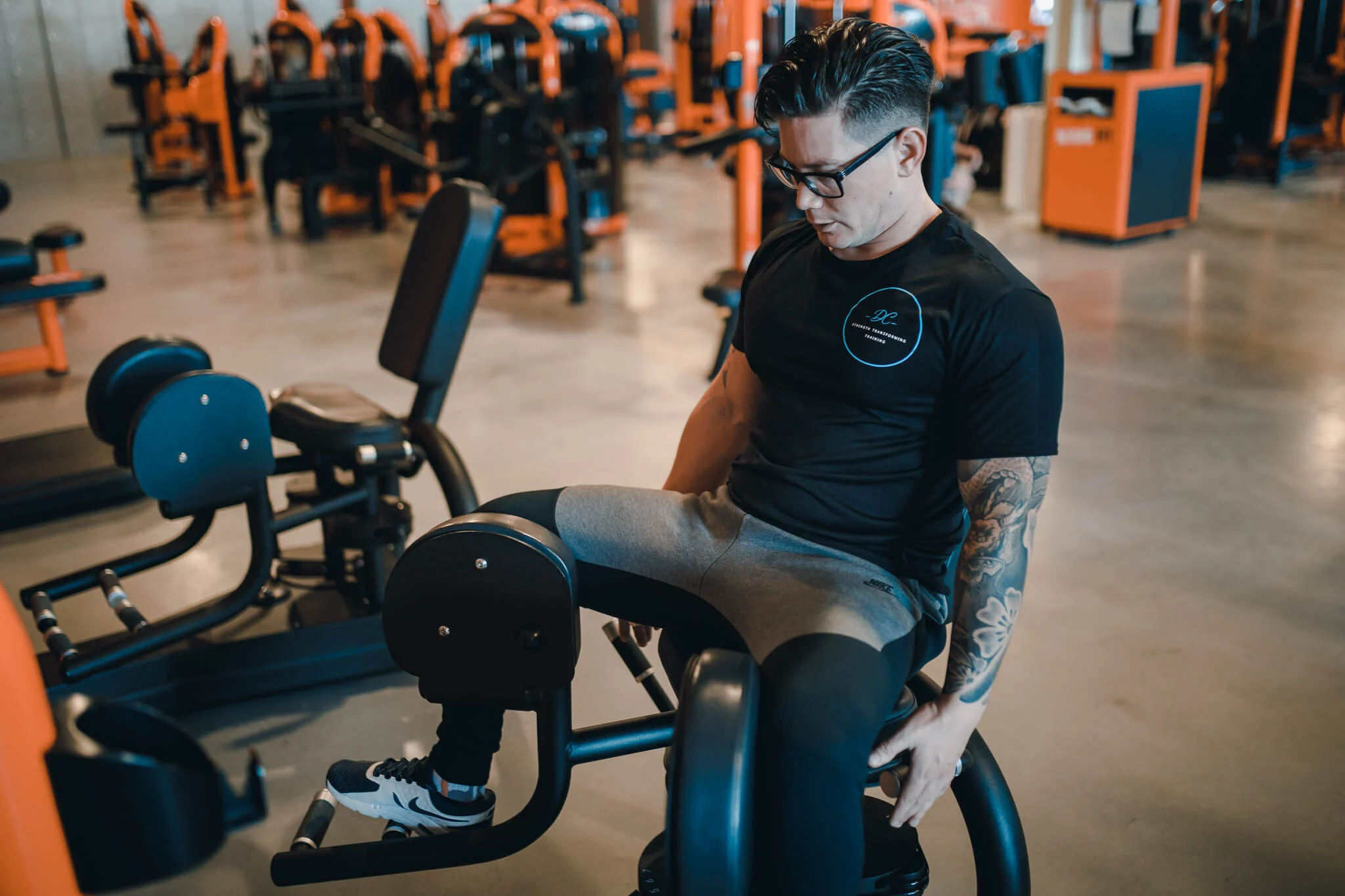
Strengthening, shaping and toning the inner and outer thigh muscles is important because they help stabilize the knees and pelvis when walking. The machines used for this purpose are weighted and look almost identical. The difference is that, when training the inner thighs, you lift the weights using a strap connected to them, pulling your leg inward. In the other variation, you push a lever connected to the weights with the outside of your ankle. There are also machines where the exercise is performed seated, with the legs pushing outward (abductor) or bringing them together (adductor), depending on whether you’re training the outer or inner thighs.
When using an inner or outer thigh machine, technique matters more than the amount of weight lifted. Perform the exercise slowly, focusing on muscle contractions. Listen to your body. If you feel pain in your thigh or knee, stop and don’t repeat the exercise until you’ve determined the cause.
Calf machine
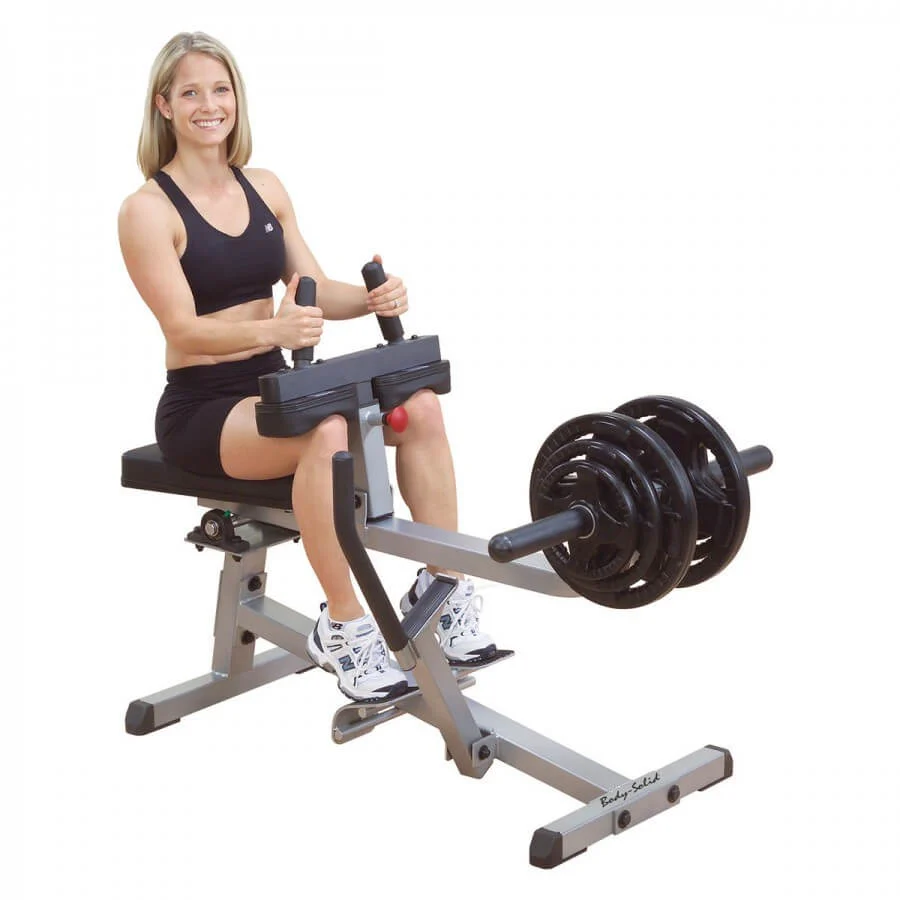
Fitness machines designed to shape the calves require you to raise yourself onto your toes or push with them. This moves and stretches these muscles to their fullest, as they are otherwise difficult to develop.
Standing or seated calf machines are the most recommended for shaping and building muscle in the calves. As the name suggests, with the standing variation you remain upright and simply adjust the upper part of the machine to your height so it rests on your shoulders. Stand with your feet shoulder-width apart, and bend your knees slightly to avoid straining the knee ligaments. From this position, lower your heels as far back as possible until you feel a strong stretch and pull in your calves. Then rise as high as possible onto your toes and repeat until you reach the required number of reps.
The seated version of this exercise is suitable for widening the calves. It uses the same movement, but the pad is placed on your upper legs, just above your knees. Keep your torso completely still.
What does a sample leg workout look like?
It’s clear that leg workouts are essential for achieving a symmetrical, well-proportioned physique, but the question remains: how do you combine different exercises and fitness machines effectively. Here’s a sample workout to guide you:
- Barbell squats – 4 sets of 6–10 reps (reduce the weight after the first two sets)
- Leg press – 4 sets of 8–10 reps
- Leg extensions – 3 sets of 8–12 reps
- Leg curl – 3 sets of 8–12 reps
- Dumbbell lunges – 3 sets of 10–14 squats per leg
- Calf exercises – 3 sets of 15–20 reps
And remember, without leg workouts, it’ll be hard to take on the #bottlecap challenge!