

Winter is the season for skiing and its various disciplines. These sports are favorites for many because they tone the whole body, strengthen the heart and bones, and also boost your mood and bring enjoyment.
On the other hand, however, skiing is a risky sport, and mastering the proper technique is essential to reduce the risk of injury or muscle soreness. It requires good coordination, balance, strength, endurance and flexibility to help prevent injuries. All of these need to be trained and improved, which is why gym workouts are especially important.
What exercises should we do for strength and endurance?
Skiing engages all muscle groups. When preparing at the gym, you need to focus on the main ones. Here they are:
Quadriceps – the four-headed muscle (the front of the thigh). It helps both bend and straighten the knees. Exercises such as squats, lunges and step-downs are suitable for training the quadriceps. Do 3 sets of 10–12 reps.
Glutes – when skiing downhill, your torso leans forward from the hips. This requires sufficient strength in the calves and hips, as they help stabilize the body. Suitable exercises include deadlifts, glute bridges, donkey kicks, step-ups and calf raises. Do 3 sets of 6–8 reps.
Read more: TOP 5 Exercises for a Sexy Female Butt
Thighs – the inner thighs help keep the skis in the right position on the snow. The outer thighs stabilize the body and help steer it. Suitable exercises for training your thighs include lateral lunges, side jumps, single-leg deadlifts, single-leg hops and step-ups onto a chair. Do 3 sets of 10–12 reps.
Abs and Back – your back keeps your body slightly bent forward as you ski downhill. Your abs also engage, while protecting your spine. Suitable ab exercises include planks, Russian twists and lying leg raises. For your back, try lat pulldowns, pull-ups and dumbbell rows. Aim for 3 sets of 10–12 reps.
Read more: TOP 5 Exercises for a Man’s Chest
Read more: TOP 5 Back Exercises
Arms – as well as your back, your arms play an important role in pushing yourself forward. That’s why it’s important to train your biceps and triceps with exercises such as dumbbell curls, barbell curls, two-arm cable curls, overhead dumbbell extensions, bench presses, kickbacks and more. 3 sets of 8–10 reps are enough.
For endurance, we recommend cardio exercises. Beginner skiers should start cardio training at least a month before their first run. Suitable exercises include running, treadmill running, swimming, cycling or using an exercise bike, and rowing. Choose one of these exercises and do 2 sessions a week, for 20 to 40 minutes, gradually increasing the duration.
What exercises should we do for coordination and balance?
Coordination between your limbs and body, and balance on the slopes, can mean the difference between an unforgettable mountain experience and an unwanted visit to the doctor. To improve these two skills, we recommend the following exercises:
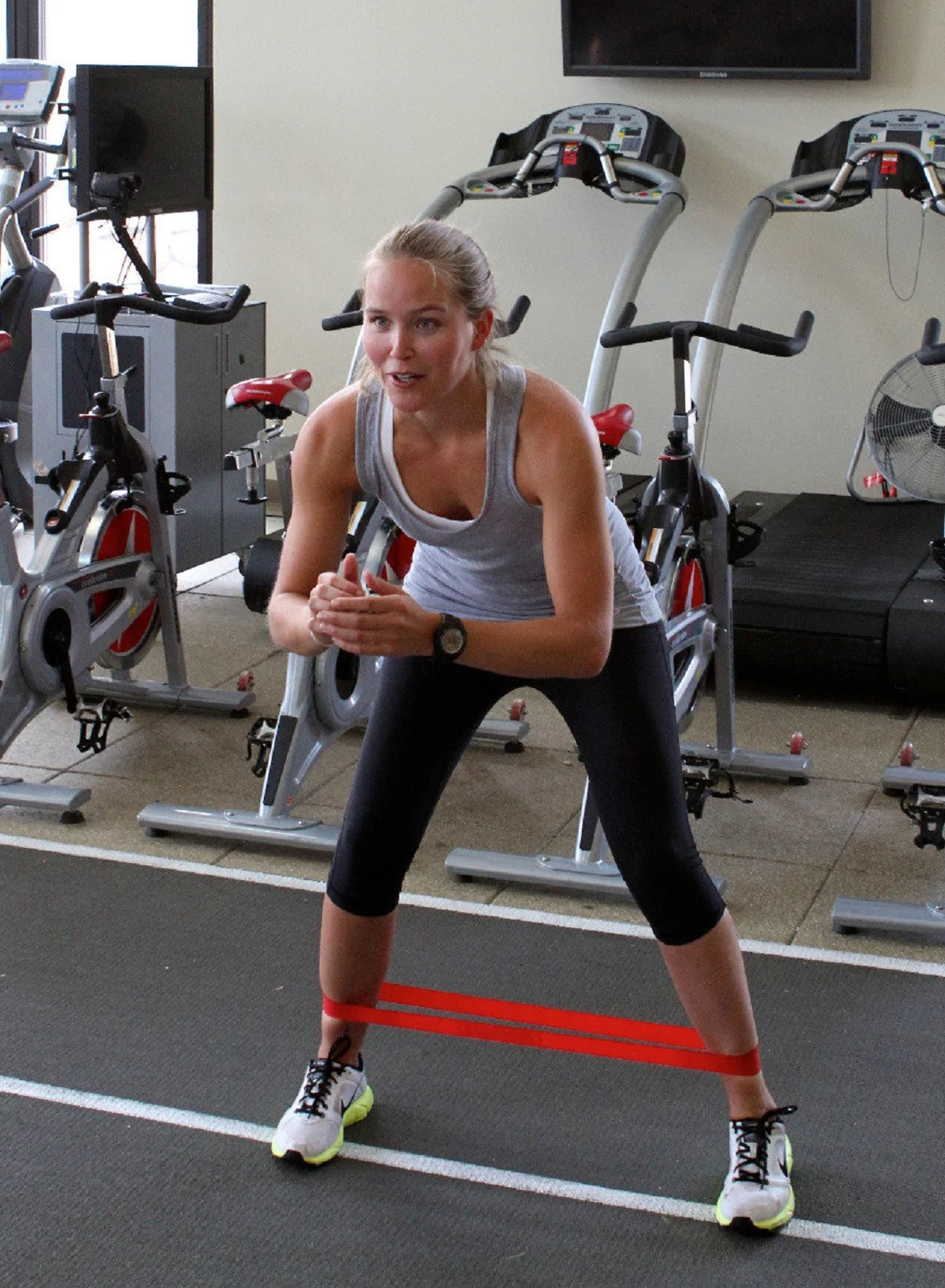
Lateral Band Walks – place the bands around your ankles, bend your knees and lean your torso forward. Take a large step to the side with your right foot, then a smaller step with your left foot to bring it closer. Take 6–7 side steps with your right foot, then repeat the set with your left foot.
Read more: How Do Pulse Fitness Instructors Train?
Single-Leg Squat on a Bench – stand far enough from the bench so you can sit on it as you squat. Stand on one leg and inhale as you squat down until you sit on the bench. Then tighten your thighs and exhale as you stand back up, without letting your other foot touch the floor. Do 6–7 reps on each leg.
Lateral Jumps onto a Platform – the platform should be very stable, but not too high. Jump sideways onto the platform, then jump down to the other side. Return to the starting position between reps. Do 10–12 reps.
How can we combine all these exercises?
To combine all these exercises, you need to put together a suitable training plan. There’s no such thing as a perfect workout plan, but the goal is to include at least two strength workouts and 3 cardio sessions a week for advanced skiers to stay in good shape.
Read more: How often and how should we train?
Warming up is essential, and stretching helps improve your flexibility, another important factor in skiing.
A sample training plan for advanced skiers could be:
Day 1: Circuit training – a high-intensity workout combining cardio and strength training.
Day 2: Full-body workout – strength, coordination, and balance exercises – 3–4 sets each.
Day 3: Cardio – running outdoors or on a treadmill, swimming, cycling on a stationary bike, or rowing – 20 to 40 min.
Day 4: Rest.
Day 5: Full-body workout – strength, coordination, and balance exercises – 3–4 sets each.
Day 6: Cardio – running outdoors or on a treadmill, swimming, cycling on a stationary bike, or rowing – 20 to 40 min.
Day 7: A longer but low-intensity workout – walking, jogging, or something gentler – lasting at least an hour.
Read more: Circuit training – what is it and what are its benefits?
Beginner skiers are advised to work on the different components (strength, endurance, coordination, and balance) on separate days, allowing 24 hours of rest between them. Start at a level that suits your abilities and focus on your goal – being strong and fit for the sport you love.