

What is BMI?
BMI (Body Mass Index), or “body mass index” in full, is a medical and biological measure that estimates body fat based on a person’s weight and height. BMI is not a measure of health, but it can indicate whether a person’s weight is below or above the normal range, which in turn can be a criterion for certain health risks.
How is BMI measured?
You can easily measure your BMI online using one of the many available online calculators. If you want to calculate it yourself right now, you only need to know your weight and height. The formula is as follows:
BMI = W/h2 (W = weight, h = height)
Let’s look at an example:
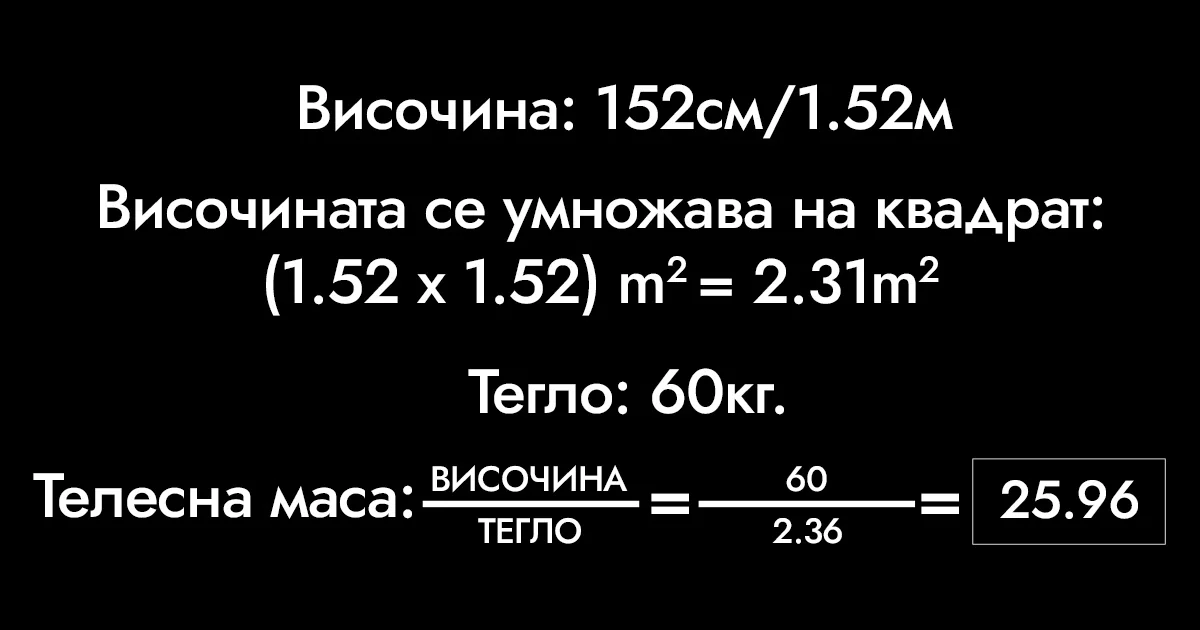
Here’s how to interpret the results:
- underweight (below 18.5)
- normal weight (18.5 to 24.9)
- pre-obesity (25 to 29.9)
- obesity (over 30)
BMI limitations
Body mass index does not take into account the amount of muscle in the body. This means that athletes with more muscle often fall into the “obese” category. For this reason, the BMI method is best suited to people who do not train to build muscle.
How to lower your BMI
A high body mass index means an increased risk of heart disease, kidney disease and high blood pressure, so it’s important to keep your BMI within a healthy range. If you’re wondering what steps you can take to achieve an ideal BMI, read our tips below.
Lower calorie intake
The basic rule for lowering your BMI and maintaining a healthy weight is to consume the same number of calories as you burn, or fewer. Use a calorie calculator to accurately track your calorie intake, or follow a meal plan, created by a specialist specifically for your needs. If you’d like a personalized plan from Pulse nutritionists, you can contact us at 0700 44 044.
Less salt
Reduce your salt intake by cutting processed foods (chips, ready meals, etc.) from your diet. Use other seasonings to add flavor to your meals.
More aerobic activity
Burn excess fat with regular cardio and strength training. If you enjoy team sports, you can join our group classes.
Now that you know what BMI is, how to interpret it and how you can influence it, it’s time to put this information to best use. Calculate your figures and, if you’d like to improve them, use the information in this article. If you’d like to book a visit to a Pulse club, you can do so here.